


Peclet Technology & SDG Align Partner to Accelerate Australia’s Circular Economy
Peclet Technology and SDG Align join forces to help Australian councils and organisations reduce waste, improve resource efficiency and accelerate the transition to a circular economy.
The partnership combines Peclet’s circular economy data and predictive analytics with SDG Align’s sustainability and local business engagement platform.
The objective is simple: understand where circular economy opportunities exist, identify the businesses involved, and help local councils and organisations turn those opportunities into action.
From waste data to circular opportunities
Circular economy is about keeping products and materials in use for as long as possible, extracting more value from resources and reducing the amount of waste we generate.
Commercial and industrial waste data is often limited, making it difficult for councils and organisations to understand how much waste businesses generate, what materials are flowing through a precinct, where those materials could potentially be reused, and what infrastructure may be needed.
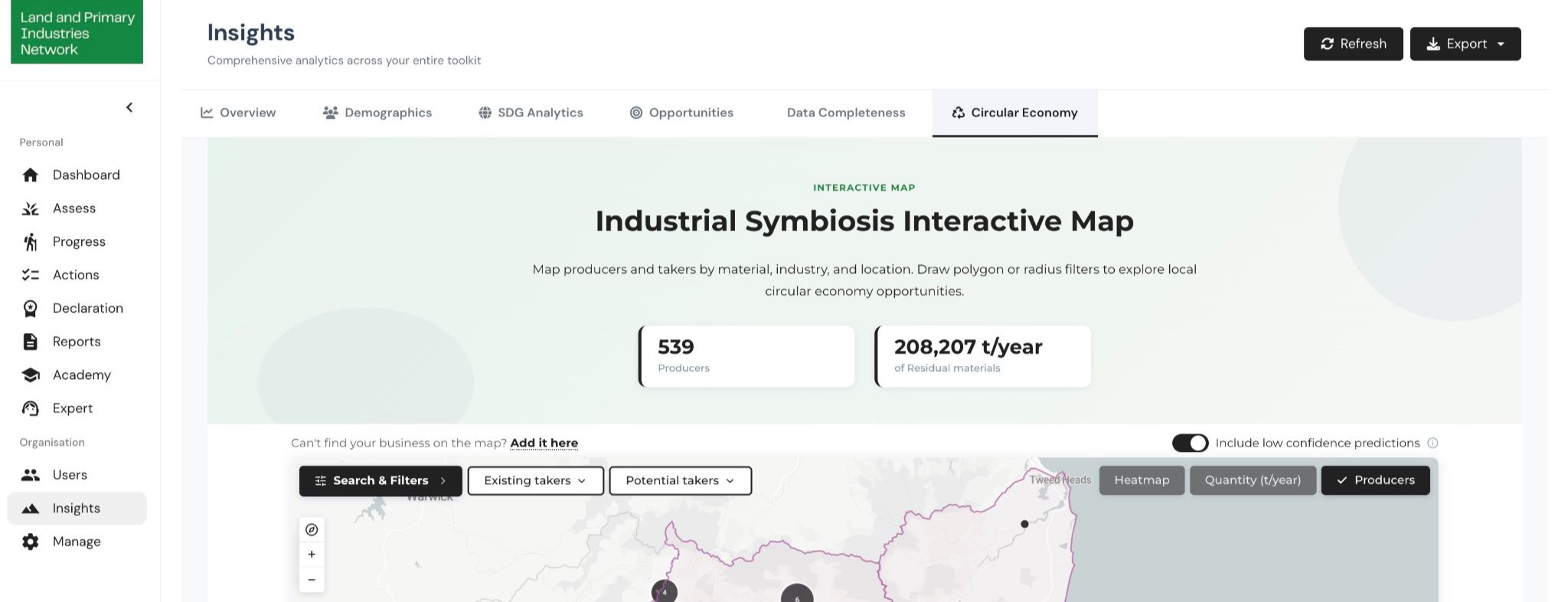
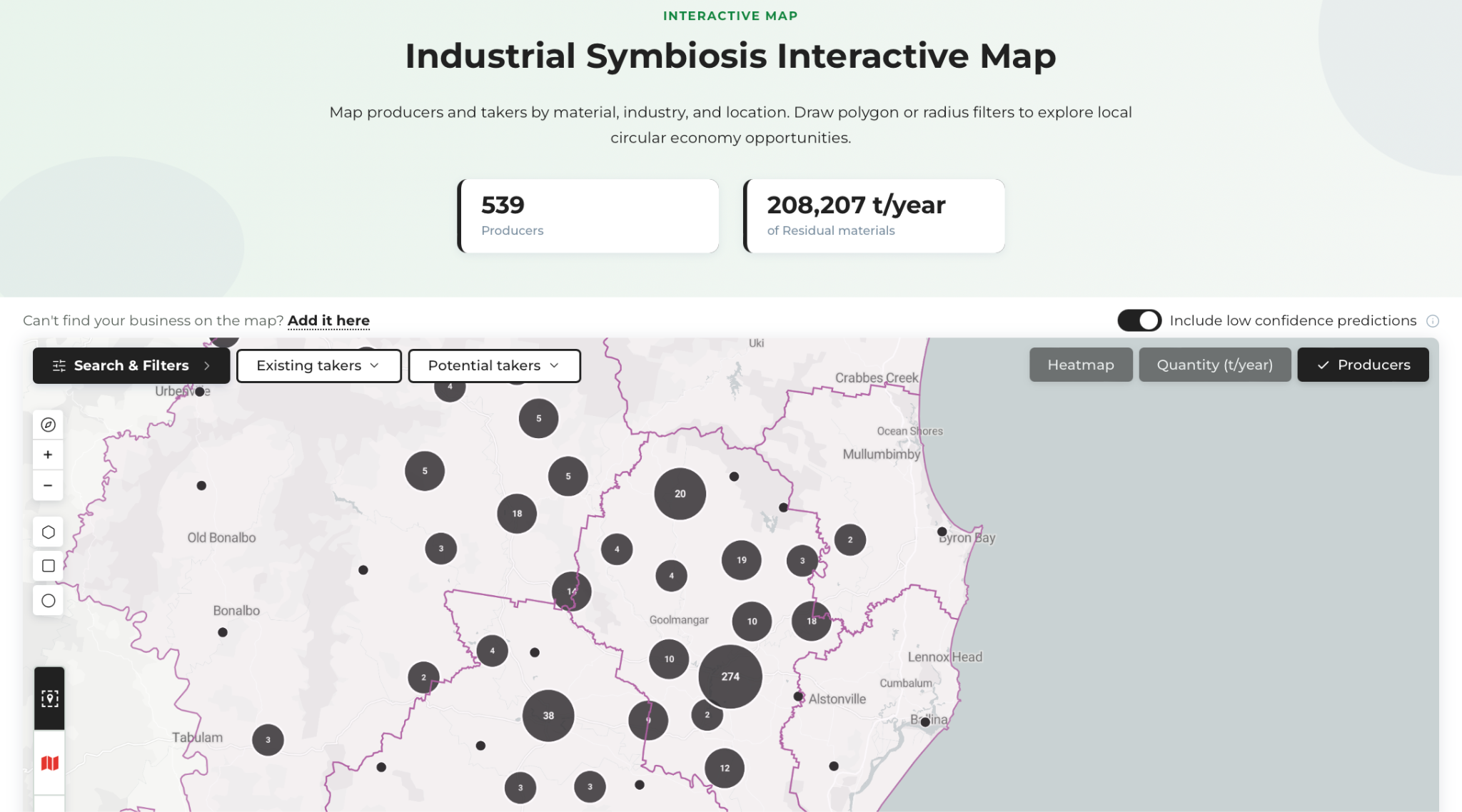
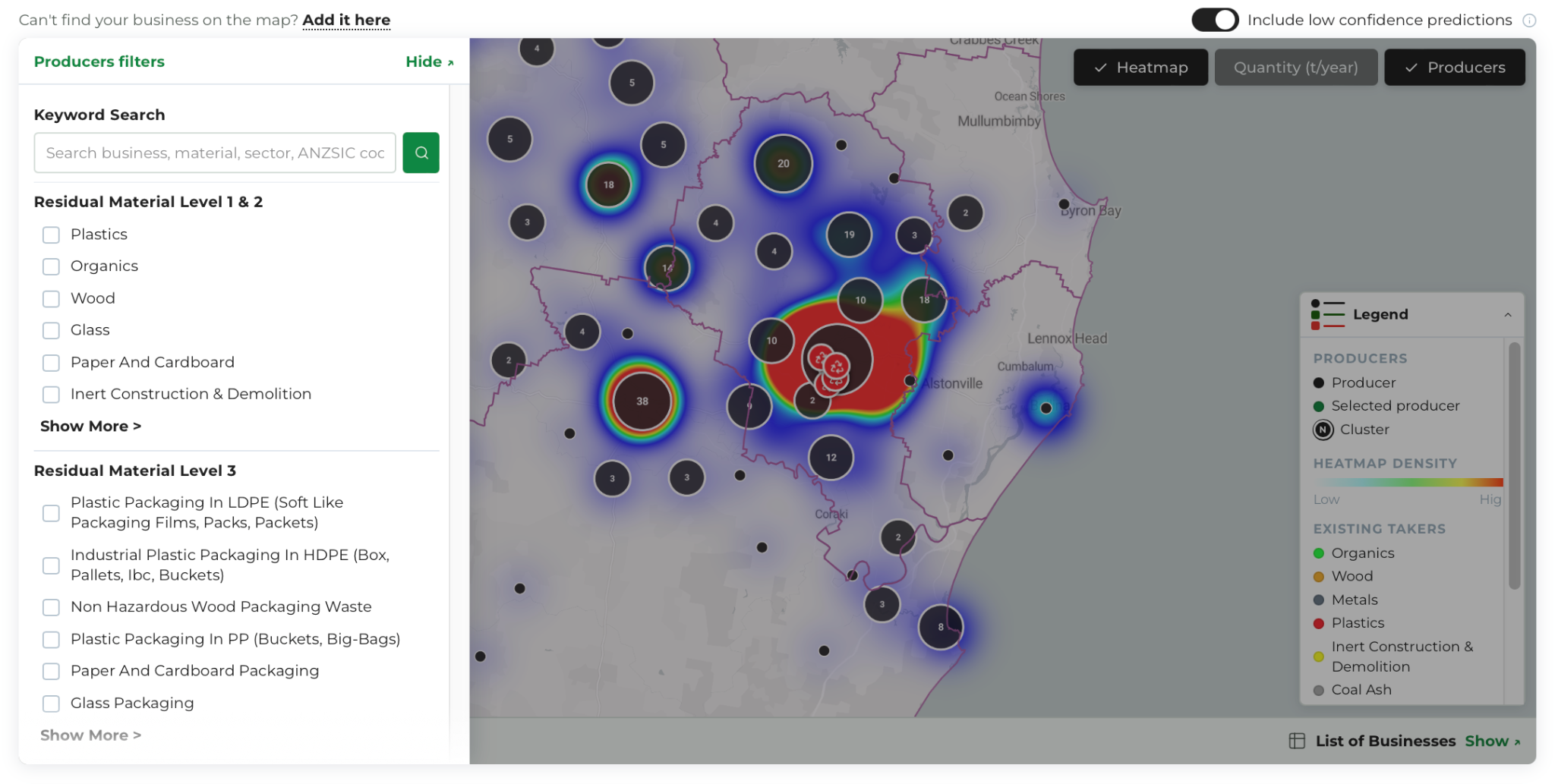
Peclet’s Circular Connect platform addresses this gap through predictive analytics. The model draws on actual waste and resource data, combined with local data, to estimate waste generation and identify potential material flows at precinct and business level.
Industrial symbiosis: connecting one business's waste with another's resource
A key concept behind this approach is industrial symbiosis: where the waste or by-products of one business become the raw materials or inputs for another.
Instead of a linear model of take, make and dispose, materials can remain economically valuable for longer by circulating within local economies.
But identifying these opportunities requires more than a waste strategy.
It requires an understanding of what businesses are producing, what resources they need, where they are located and how they can work together.
This is where the partnership with SDG Align adds an important dimension.
Peclet provides the data and predictive intelligence to identify potential opportunities.
SDG Align provides the platform and engagement capability to work directly with businesses and help them take practical sustainability action.
In other words: Peclet can help identify the opportunity. SDG Align can help engage the businesses needed to activate it.
Already turning the partnership into action
This partnership is already taking shape through several projects across Australia.
Peclet Technology and SDG Align are currently working on the Northern Rivers Circularity Hub Discovery Stage, exploring how a regional circular economy hub could support local businesses, councils and producers while strengthening regional development, infrastructure planning and supply chains.
It is a good example of the value of bringing the two approaches together: from regional intelligence to local engagement, and from identifying opportunities to building the connections needed to act on them.
And this is only the beginning. Other projects are already in the pipeline, and there is plenty more to share in the coming months. We look forward to opening up these projects, sharing what we are learning, and getting feedback from councils, businesses and other organisations working towards a more circular and resilient Australia.
Bringing the small business perspective into the circular economy
Small and medium-sized businesses are an essential part of Australia's economy, but they can also find sustainability reporting, planning and implementation challenging.
SDG Align was developed around this challenge, providing organisations with a practical way to understand their sustainability maturity and develop actions aligned with the 17 Sustainable Development Goals.
One of those goals — SDG 12: Responsible Consumption and Production — is directly connected to the circular economy.
For Australian businesses, this means finding practical ways to use resources more efficiently, reduce waste, improve recycling and reuse, and rethink how products and materials move through the economy.
Combining this business engagement capability with granular waste modelling creates an opportunity to address a gap that has often been difficult to tackle: understanding and engaging small businesses at scale.
A timely opportunity for Australian councils and businesses
Australia is increasingly moving towards a circular economy.
The Australian Circular Economy Framework sets national objectives to reduce Australia's material footprint, improve materials productivity and significantly increase the recovery of resources.
At the same time, new waste requirements are creating additional pressure for businesses and councils to understand and manage their waste streams. The rollout of commercial FOGO requirements in NSW from July 2026 is one example of how the regulatory environment is changing.
The challenge is connecting data, businesses and action — at the scale needed to create meaningful change.
From data to action
Peclet Technology and SDG Align share a common goal: helping Australian councils, organisations and communities reduce waste, use resources more efficiently and reduce carbon emissions.
The partnership brings together two complementary perspectives:
Peclet Technology brings circular economy data, predictive modelling and precinct-level intelligence.
SDG Align brings sustainability planning, business engagement and a platform designed to help organisations turn sustainability objectives into action.
Together, this creates a proposition that can help councils and organisations move beyond simply measuring sustainability.
It can help them identify opportunities, engage local businesses and build practical circular economy programs around real-world data.
Because circular economy will happen when data, businesses, councils and communities are connected and when identified opportunities are turned into action.