


Internal Data Portals
Open data portals have become an important part of how local governments build transparency, share information with the public, and meet regulatory expectations. They enable greater access to council data, foster innovation, and support community initiatives. However, not all data can or should be made public - and for councils to function efficiently, data also needs to be used internally in a structured, secure, and actionable way.
That's where Internal data portals play a complementary role. While Open data portals support external engagement, Internal data portal support day-to-day work across departments. These platforms are designed to bring together datasets from multiple internal and external systems, providing staff with timely access to the data they need to plan, coordinate, and evaluate their services. This includes data on infrastructure, mobility, energy, local economy, community wellbeing, and more - all organised in a way that aligns with how councils operate.
The Role of Internal Data Portals
Unlike general-purpose tools or static reports, internal data portals present information as curated, high-value resources that can be used across teams. Structured around council business units and strategic goals, they ensure that everyone - from analysts to planners, finance officers to sustainability teams - can access and apply consistent data in context, without relying on ad-hoc reports or disconnected systems.
An internal data portal, sometimes referred to as an internal data marketplace, acts as the central access point for all data assets within the organisation. Users can browse a catalogue of raw datasets, access structured views aligned with operational needs, and open connected data visualisations such as Power BI dashboards - all from one platform.
Importantly, staff should also be able to interact with the data: either by performing basic analysis and visualisation directly within the portal, or by exporting the data to continue working in their preferred tools. The platform must be easy to use and navigate, even for non-technical users - a key step toward enabling true data democratisation across the organisation.
Darwin and Campbelltown: Putting Internal Data Portals to Work
Darwin and Campbelltown offer two strong examples of how internal data portals can support more responsive and informed operations.
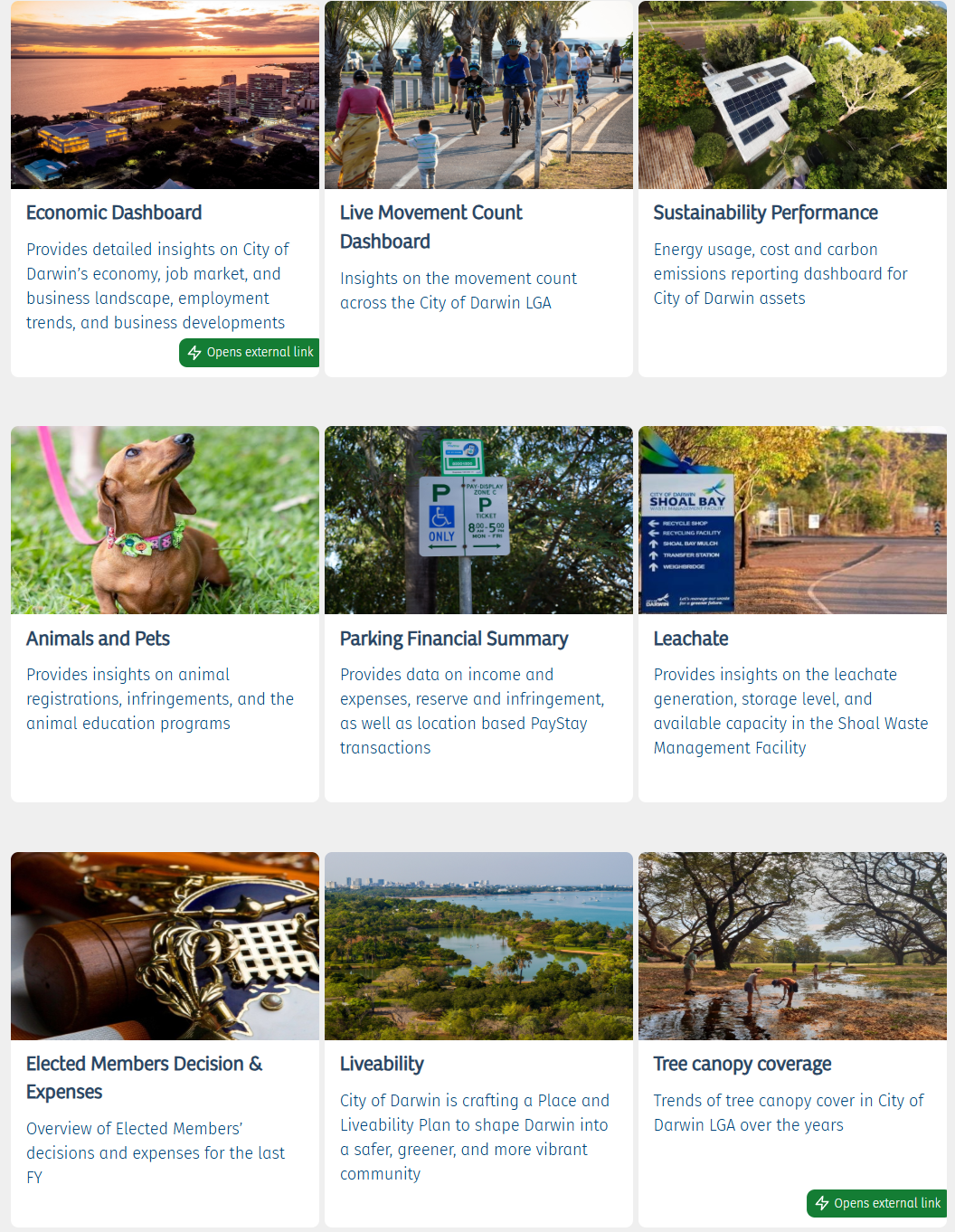
In Darwin, the internal data portal serves as a central platform for accessing and working with information across council operations. It brings together data from internal systems - such as council databases and operational tools - as well as external sources including open data platforms, third-party providers, and sensor networks. This integration allows staff to monitor key metrics, coordinate between teams, and make more informed decisions at both strategic and operational levels.
The portal includes a broad range of focus areas, such as economic performance, parking and movement data, sustainability targets, energy use, and tree canopy coverage. Staff can browse datasets, view interactive dashboards, and access visualisations that are relevant to their roles. These resources are presented in a way that supports cross-departmental use, helping teams understand trends across different parts of the city and align actions with broader planning goals.
By providing a single point of access, the portal improves consistency in how data is used internally, reduces duplication, and enables staff to engage with data more effectively in their everyday work.
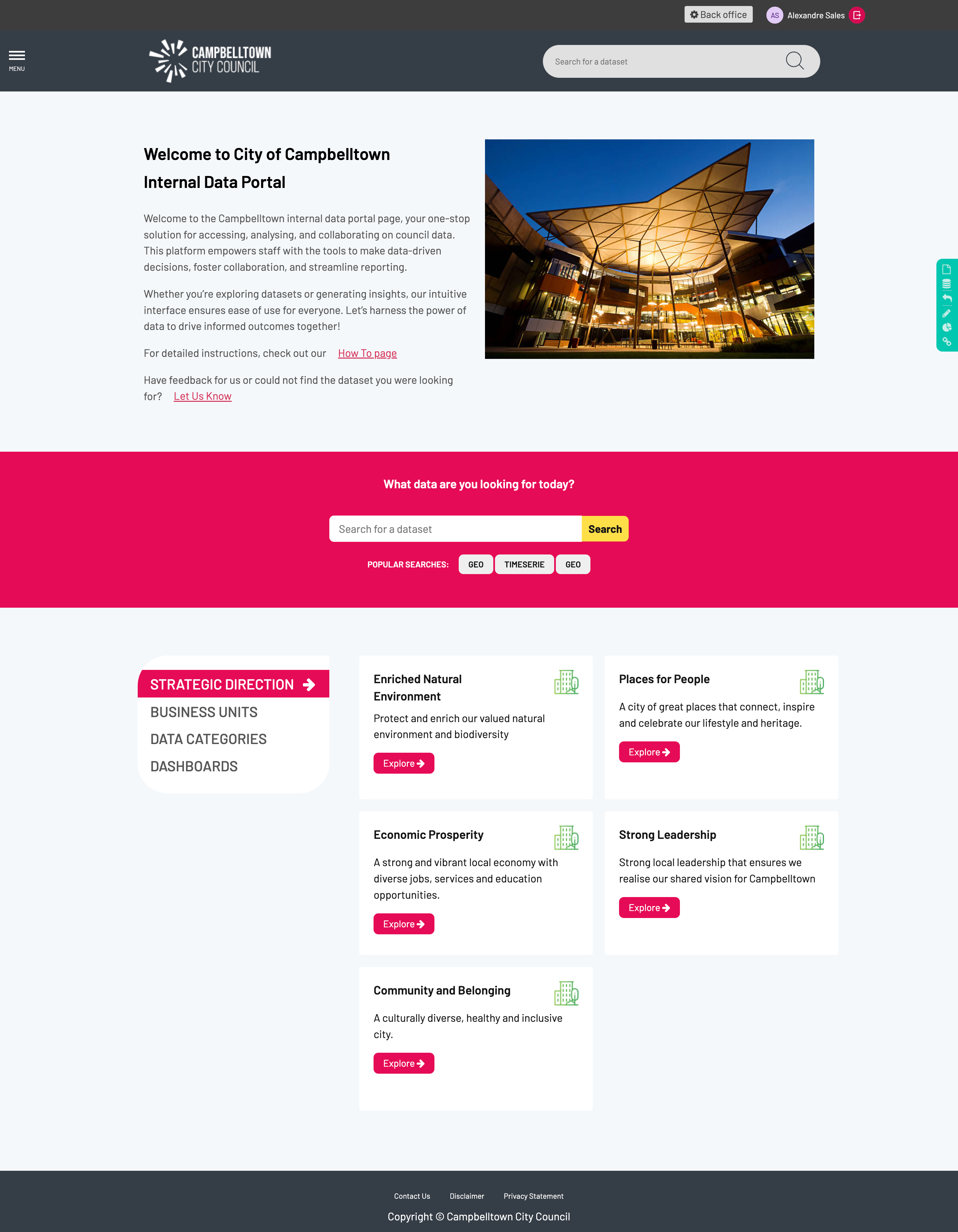
Campbelltown's internal portal follows a similar logic but is structured around strategic directions and business units, making it easier for staff to navigate and find what they need. It brings together dashboards and datasets on topics such as childcare benchmarks, chronic health conditions, crime statistics, infrastructure projects, and community surveys. This structure supports collaboration between departments and gives staff the ability to work with consistent, up-to-date data, whether they're preparing reports, evaluating programs, or planning future initiatives.
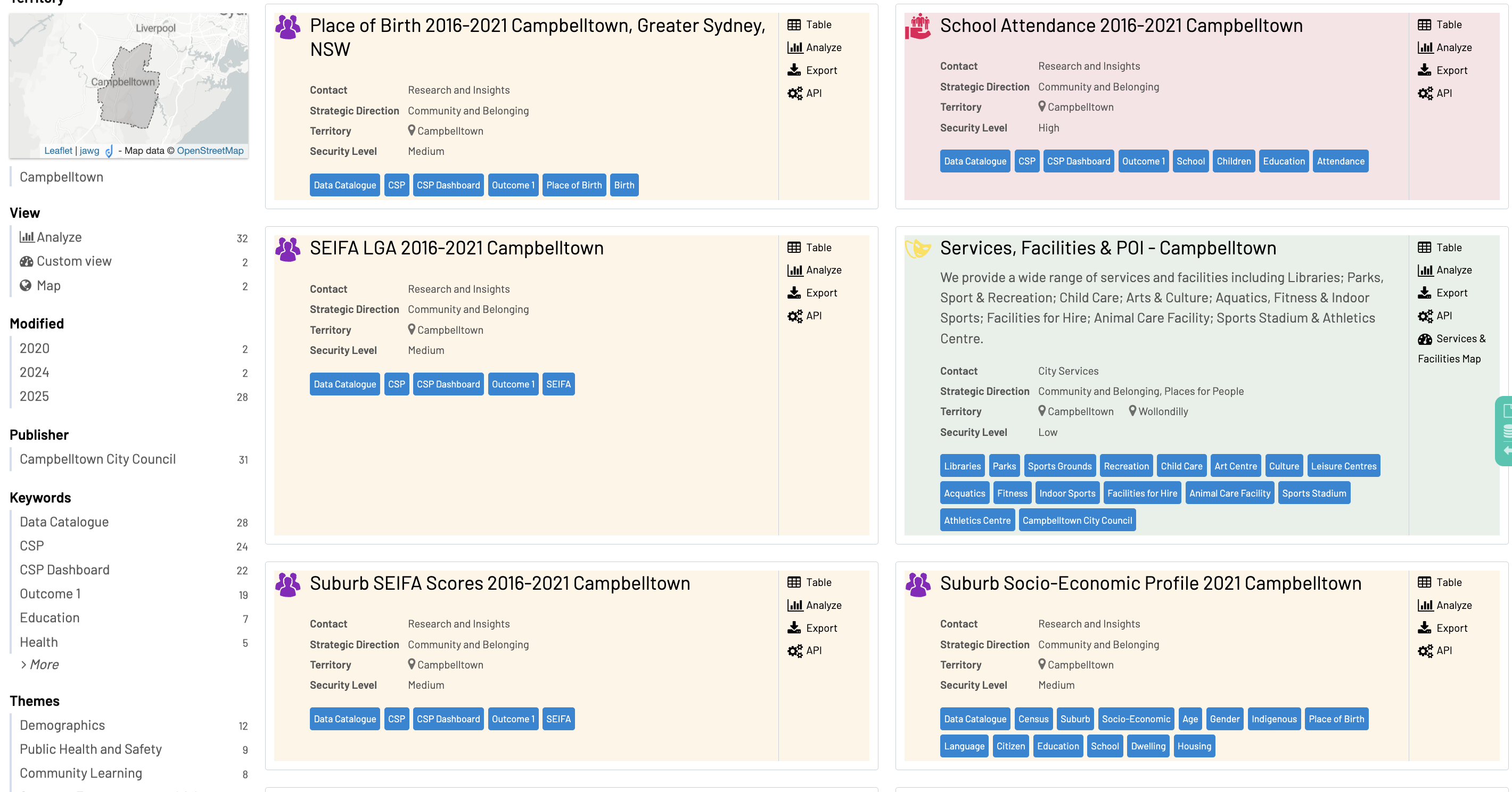
To help manage access, data assets are colour-coded based on sensitivity levels, making it clear which datasets are intended for internal use only and which can be shared externally. The portal also helps surface information that would otherwise be stored in systems with user-based licensing. By consolidating this data in a platform licensed for unlimited internal users, Campbelltown can share information more widely without incurring additional costs.
Supporting Better Decisions from Within
Internal data portals are becoming a core part of how organisations modernise their operations. As more teams rely on data to plan, evaluate, and improve services, the need for secure, accessible, and well-organised internal data portals will only grow. These platforms reduce duplication, improve coordination, and make it easier to turn insights into action.
If you want to learn more about our services, check our get inspired page and case studies. For tailored solutions from our experts, please contact us.