


How FoodShare harnessed data to advance circular food systems
FoodShare is a community service organisation based on the NSW-Victoria border in Australia. Operating across two state governments, it plays a critical role in addressing the growing demand for food relief.
The Feed More Waste Less initiative expands access to rescued food for thousands of individuals and families across Northeast Victoria and Southern NSW.
With funding from Sustainability Victoria through the Circular Economy Communities Fund, FoodShare uncovered new ways to divert food waste from landfill and strengthen local food recovery systems.
To launch Feed More Waste Less initiatives, one of the first tasks was to gather data. The dataset initially in the possession of this organisation was incomplete and insufficient to launch the projects. The biggest challenge: a lack of accessible waste and resource data, which made building Industrial Symbiosis—collaborations to reuse food waste and reduce environmental impact—difficult.
In this context, Mark Lucey, project coordinator at Foodshare, collaborated with Peclet Technology.
" The Peclet Tool was invaluable in planning, because it gave us such a good baseline dataset. Where if we were just shooting blind, trying to get that information through other sources, it most probably would have been more complicated.
-Mark Lucey
Circular Economy Data Portal: Peclet's solution
Peclet Technology's Circular Economy Data Portal delivers insights into precinct-level waste production and identifies opportunities for circular economy initiatives. By combining global datasets with enriched local data, the predictive model estimates waste generated and matches it with potential waste recovery partners.
FoodShare's personalised dataset provides visibility of food waste across multiple councils with allowing FoodShare to target relevant food waste producers.
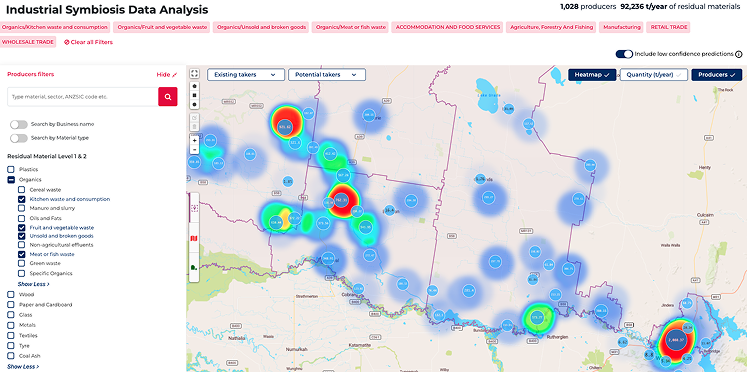 Interactive Map on the Circular Economy Data Portal - visualisation of organic waste through the heatmap view
According to Mark Lucey: " Peclet managed to get more data, so I could obtain more information on the categories pertaining to the area we were looking at: hospitality, food manufacturers, cafes, restaurants, accommodations, houses, etc.”
From Insight to Action
"It's a time-saving solution because that data set has a lot of information in one place." - Mark Lucey
FoodShare utilised the data portal to:
- Conduct in-depth market research.
- Design smarter implementation strategies for the Feed More Waste Less project
- Stage milestones efficiently, reducing costs and overcoming geographic constraints.
- Build a solid baseline for planning the geographical expansion
" The Peclet Tool was invaluable in that planning, because we had such a good baseline data set. Where if we were just shooting blind, trying to get that information through other sources, it most probably would have been more complicated.”
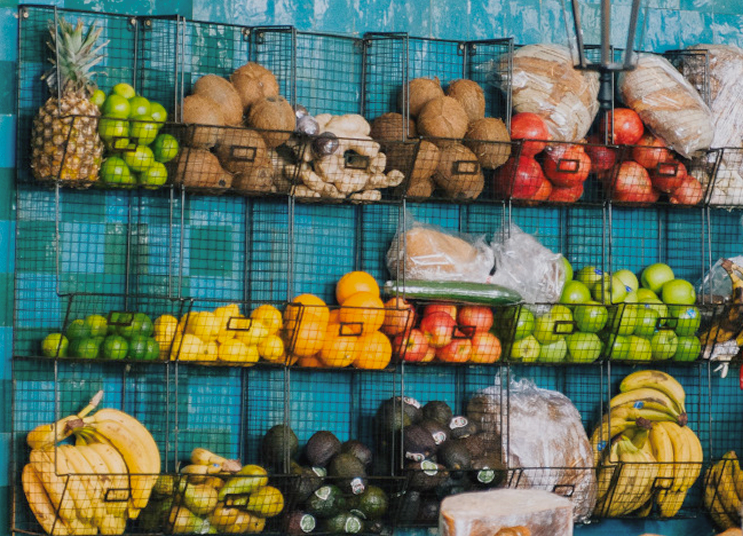

1,562,000 Kg
Non-consumable food diverted from landfill through partnerships
(2022 - 2025 period)

102,303 Kg
Non-consumable food composted, recycled, or repurposed
(2022 - 2025 period)

504,000 Kg
Food distributed in one year, providing 1 million meals across Victorian and NSW communities.

150+
businesses engaged and 60+ projects launched
If you want to learn more about our Circular Economy Data Portal, check our solution page.